Adult teeth straightening: For better health, regardless of the age
People will usually associate the desire for straight teeth with a desire to have the Hollywood-style, aesthetically-pleasing smile that all the celebrities show off in magazines. It is easy for an individual's teeth to fall off the straight and narrow path or grow in crooked. While people hem and haw at the price to straighten teeth and decide against teeth straightening, they may not understand the health risks crooked teeth include.
The risks of crooked teeth
Crooked teeth will trap food particles and form plaque that can continue to build up over time. These are in the hard-to-reach places of teeth that a toothbrush cannot reach. In other cases, an individual with crooked teeth is unable to floss between the teeth and will only allow the plaque to spread.
The Centers for Disease Control and Prevention, CDC, find that 27 percent of adults between the ages of 20 to 44 had untreated dental caries from 2011 to 2012. The American Dental Association, ADA, states that crooked and crowded teeth “can lead to tooth decay, gum disease and tooth loss.” Since crooked teeth are more difficult to clean, people may feel less motivation to brush twice a day and floss once a day.
“When teeth are in the wrong place, they also can keep the jaws from developing properly,” the ADA explains. People may take the actions of chewing and speaking for granted on a regular basis, without realizing that crooked teeth or a misaligned bite can affect those actions. “An uneven bite can interfere with chewing and speaking, can cause abnormal wear to tooth enamel, and can lead to problems with the jaws,” the ADA adds.
While children will commonly wear braces at a young age to straighten their teeth, many other people will not wear braces until a much later period in their life. Adult teeth straightening offers multiple methods to discreetly straighten one's teeth, regardless of age.
Straighten teeth and be discreet
One factor of braces that many children and adults fear is the idea of the braces being obvious. Adults who believe that braces are their only option to straighten their teeth are unaware that more discreet options are available. These options include:
Traditional metal braces
Clear ceramic braces
Clear Aligners
Invisalign®
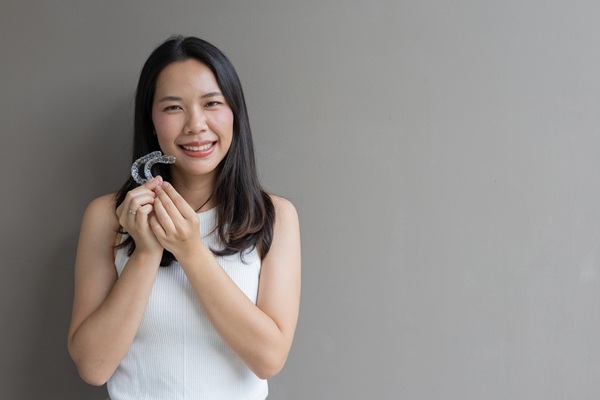
Clear braces are similar to traditional braces, except that the brackets and wires are tooth-colored. The clear braces blend in with the teeth to make it more difficult for other people to notice them. Clear aligners and Invisalign® are alternative solutions that do not require metal wires or brackets. Clear aligners are similar to a mouth guard except that they are nearly invisible. The patient will wear clear aligners for 22 hours per day, switching them out every few weeks to gradually adjust the teeth into the right position.
Adult patients need to consider these options when considering adult teeth straightening, since living with crooked teeth can have multiple health consequences. The ADA lists some of the health problems people will experience when they do not correct an abnormal bite to include:
Tooth decay
Gum disease
Tooth loss
Affected speech and/or chewing
Abnormal wear to tooth enamel
Jaw problems
Straightening teeth will also offer cosmetic benefits for adults as well. Adults will feel more confident in their smile and overall appearance. Along with cosmetic appeal, adult teeth straightening will also keep an adult healthy. There is no reason to struggle with crooked teeth or a misaligned bite any longer. If you or a loved one feels that adult teeth straightening are a solution for you, do not hesitate to call us at (949) 201-4719 and schedule an appointment.
Finding a high-quality dentist near me is the first step toward maintaining a healthy smile. This trusted professional can help ensure that you always have access to oral care services in the San Clemente area. If you are currently searching for a reliable provider, the following guide provides a strategic selection process to help you…
Considering Invisalign® after a tooth relapse? In orthodontics, a tooth relapse occurs when the teeth go back to being crooked after braces treatment. When this happens, it can be easy to want to just ignore it and move on; however, oral health and hygiene are both put back at risk when the teeth are crooked.…
If you are thinking of getting braces and do not want to feel self-conscious about wearing them, consider clear braces. These braces are less noticeable. Many people opt for them because they are better-looking, comfortable and can give patients a straight smile. Investing in clear braces is definitely worth it.With traditional braces, the brackets are…
A cosmetic dentist often hears concerns about whitening discomfort and can explain why sensitivity sometimes increases during treatment. Whitening products lift stains by allowing active ingredients to move through enamel, which can temporarily irritate the tooth's inner structures. Understanding what causes sensitivity and how to reduce it helps patients pursue a brighter smile more comfortably.Whitening…
Finding a high-quality dentist near me is the first step toward maintaining a healthy smile. This trusted professional can help ensure that you always have access to oral care services in the San Clemente area. If you are currently searching for a reliable provider, the following guide provides a strategic selection process to help you…
Considering Invisalign® after a tooth relapse? In orthodontics, a tooth relapse occurs when the teeth go back to being crooked after braces treatment. When this happens, it can be easy to want to just ignore it and move on; however, oral health and hygiene are both put back at risk when the teeth are crooked.…
 People will usually associate the desire for straight teeth with a desire to have the Hollywood-style, aesthetically-pleasing smile that all the celebrities show off in magazines. It is easy for an individual's teeth to fall off the straight and narrow path or grow in crooked. While people hem and haw at the price to straighten teeth and decide against teeth straightening, they may not understand the health risks crooked teeth include.