A Kid-Friendly Dentist Answers FAQs About Baby Teeth
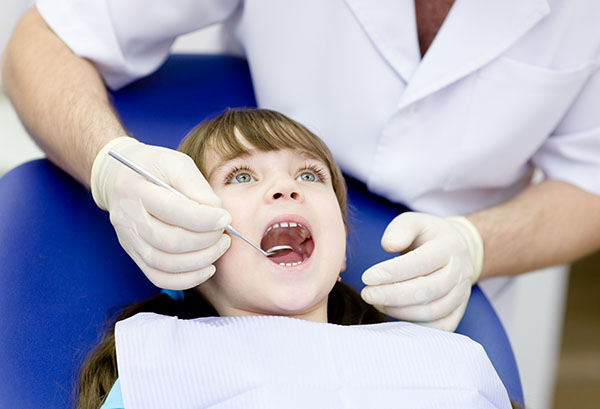
Finding a kid-friendly dentist can be one of the most important steps to ensuring that your child starts off with strong oral health practices. While some people may feel that caring for primary teeth, or “baby teeth,” is not as important as caring for permanent teeth because the baby teeth will fall out anyway, this is not the case.
FAQs about baby teeth
When should my child first visit the dentist?
The American Academy of Pediatric Dentists recommends that you take your child to visit a kid-friendly dentist when their first tooth emerges or by their first birthday, whichever comes first. This initial visit is very important, as it establishes your child’s dental “home” and can help prevent dental problems from arising.
Are baby teeth really that important?
Absolutely! Baby teeth are vital to the speech development of children, as well as proper health and nutrition through chewing. Additionally, since permanent teeth develop very close to the roots of baby teeth, having healthy baby teeth can aid in forming a healthy path for your child’s permanent teeth to follow.
When should I start brushing my child’s teeth?
We recommend that you start caring for your child’s oral health as soon as you come home from the hospital! While children obviously do not have teeth at this point, you should be gently wiping your child’s gums with a soft, damp washcloth at least once per day. Once your child’s teeth begin to emerge, switch to a soft-bristled, infant-sized toothbrush. Adding a tiny smear of fluoride toothpaste can help fight against cavities and should be increased to a small, pea-sized amount around three years old.
Do baby teeth need to be X-rayed?
In short, yes. X-rays are important because they can show any underlying dental issues that may not be visible on the surface. X-rays of baby teeth are primarily used to detect cavities between the teeth and to monitor the growth of adult teeth. Luckily, the radiation exposure during a dental X-ray is extremely low, and X-rays only need to be repeated once every year or two.
How often should my child visit the dentist?
Your child should follow your own dental visit schedule of a check-up every six months. Regular, biannual dentist visits can help prevent cavities and other dental problems, as well as teach your child good oral health practices and get into a lifelong routine of visiting a dentist.
Importance of a kid-friendly dentist
Regular visits to a kid-friendly dentist are extremely important. Not only can regular visits help your child form important oral health habits, but they can also help promote good health overall. Gum disease and tooth decay have been linked to heart disease and other harmful conditions, so starting strong oral health practices early are even more important! Our team can help you better understand your child’s oral health and put them on the path to a healthy life.
Request an appointment here: http://dentistinsanclemente.com or call Nina Basti DDS at (949) 201-4719 for an appointment in our San Clemente office.
Check out what others are saying about our services on Yelp: Read our Yelp reviews.
Recent Posts
There are benefits to choosing an experienced implant dentist over one who is relatively new in the profession. Dental implants require a more complex process that involves several steps, and choosing the right implant dentist may help make the process more convenient, less invasive, and safer.It is helpful to learn more about dental implants, how…
If you or a loved one has a dental abscess, then you need to visit an emergency dentist as soon as possible to ensure the infection does not spread to the rest of the mouth. A dental abscess causes more than a simple toothache, and delaying care may increase the risk of serious complications. As…
Teeth whitening has become one of the most popular cosmetic dental treatments, and many patients choose at-home options because they offer convenience without sacrificing professional oversight. Unlike over-the-counter products, professionally provided whitening systems combine customized treatment with predictable results. A dentist often recommends the right whitening approach based on each patient's goals, oral health, and…
A dental crown is meant to protect a weak or damaged tooth, so it can feel frustrating if it starts to hurt. Minor sensitivity can be expected as the tooth adjusts to a new crown. However, pain that lasts, gets worse, or starts months later may mean something needs attention.Here are three of the most…